This isn't about being a cynic. It’s about being a skeptic.
The Psychology Behind Misinformation Spread

Back in the day, if someone told you a lie, they had to look you in the eye to do it. You could usually tell they were full of it because their ears would turn red or they could not stop fidgeting with their car keys. Now, the lie does not have to look you in the eye. It just has to look like a “breaking news” alert on your phone.
Misinformation is not just a bunch of people being wrong at the same time. It is a precision strike on your biology. The internet has turned information into a circus, and we have traded depth for speed. Here is why your brain is currently being hijacked by a plague of digital garbage.
The Curiosity Gap and Your Hijacked Hardware
Humans are hardwired to hate incomplete information. Scientists call it the “curiosity gap.” When you see a headline that withholds the punchline, it creates a cognitive itch that your brain can only scratch by clicking. You are not stupid for clicking on it. You are just a human with hardware that is being exploited by an algorithm.
The people peddling this stuff also use “loss aversion” to make you feel like you are missing out on a secret. Research shows your brain processes a shocked face in a thumbnail 60,000 times faster than actual text. This is “visual primacy” at its worst. They are not trying to inform you. They are trying to trigger a physical reaction before your common sense has a chance to wake up [1].
The Habit of the Share
We used to think people shared fake news because they were not thinking clearly or because they were blinded by politics. It turns out it is actually worse than that. A study from USC found that social media platforms are built to turn sharing into a mindless habit. About 15% of the most frequent sharers are responsible for spreading 30% to 40% of the fake news [2].
These platforms reward you for “engagement,” not for being right. Once the habit kicks in, you start sharing things automatically based on cues from the app, completely ignoring whether the story is actually true. It is like drinking water from a garden hose, except the hose is connected to a sewer and the water is designed to make you stay thirsty [2].
The Economic Grift
In the old days, we had editors. They were the gatekeepers who decided what was important based on actual journalistic merit. But when the news moved online, the business model shifted from subscriptions to ad revenue.
Now, we live in an “attention economy.” Fake news is a business. These “news” sites can attract 60% to 220% more visitors than real sites because they are loud and clickable [3]. In the US alone, it is estimated that $2.4 billion in ad money goes to these digital landfills every year [4]. They are not writing articles to tell you the truth. They are writing them to get you to click so they can collect a fraction of a cent from an advertiser who does not even know their ad is there.
The Truth is Boring
Algorithms do not care about nuance. They reward the “shareable” and the “outrageous.” We have reached a point where the truth is often too boring to compete with a well-crafted lie. We have “confirmation bias,” which means we only look for stuff that already agrees with us, and “intellectual humility” is in short supply [5].
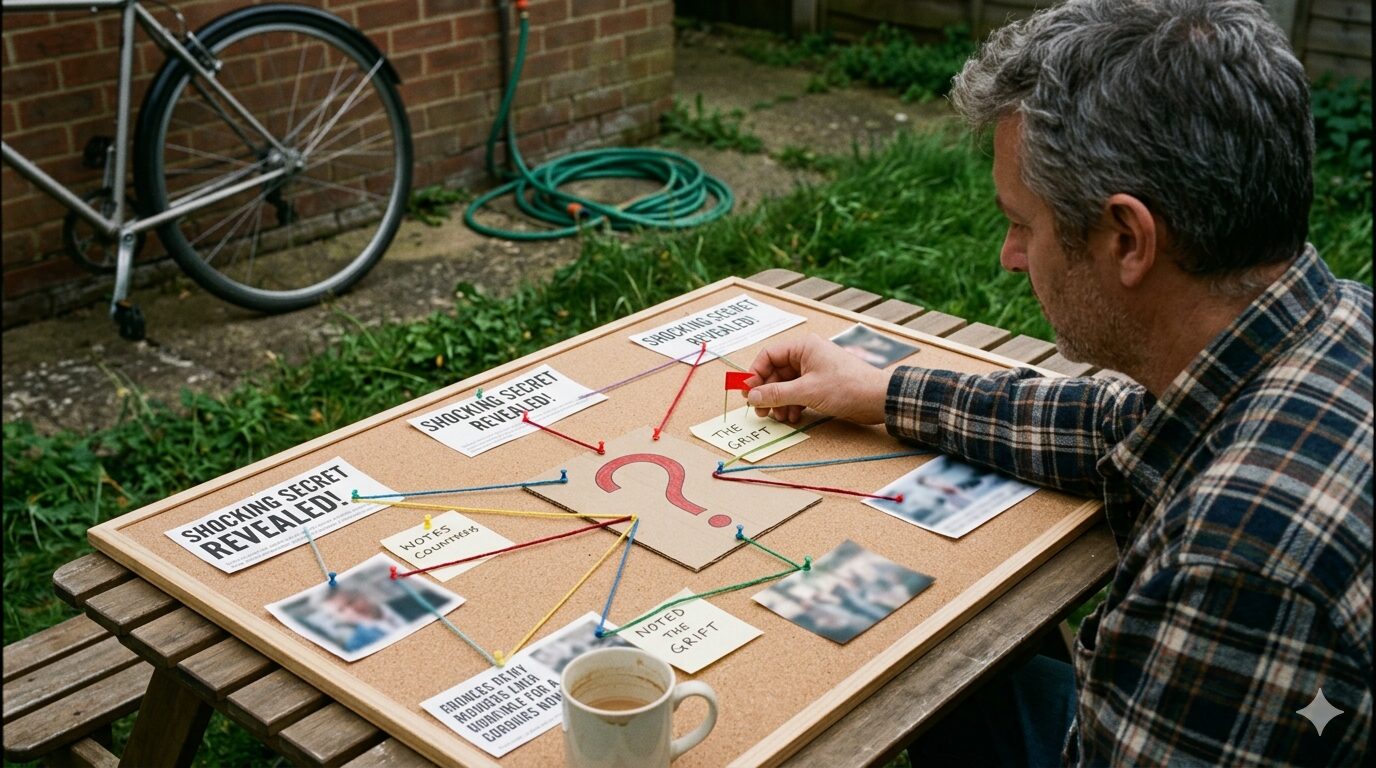
It is okay to admit the internet is exhausting. You do not have to click on everything. If a headline is trying that hard to get your attention, it probably is not worth giving. Put the phone down. Go ride a bike. The “shocking secret” in that article is not going to change your life, but a little peace and quiet might.