
This isn't about being a cynic. It’s about being a skeptic.

Bob’s Toolbox: Resources for the Sane
Bull Detectors | DIY | Social Media | Health
The internet is a firehose of garbage. Most of what you see is designed to make you angry, scared, or reach for your wallet. If a headline feels like a punch to the gut, it’s probably a lie.
Don’t take my word for it. Don’t take their word for it. Check the receipts yourself. Here are the few places online that haven’t completely sold out to the click-count.
The professional “Bull Detectors”
These organizations are the gold standard. They don’t care about your feelings; they care about the math and the transcripts.

FactCheck.org
These folks are a non-partisan, non-profit “consumer advocate” for voters. They’ve been around since 2003, monitoring the factual accuracy of what comes out of Washington. They don’t have a horse in the race; they just like the truth.

PolitiFact
Famous for their “Truth-O-Meter.” They take specific claims from politicians and pundits and run them through the ringer. If someone is lying, they call it “Pants on Fire.” It’s direct, and it’s effective.
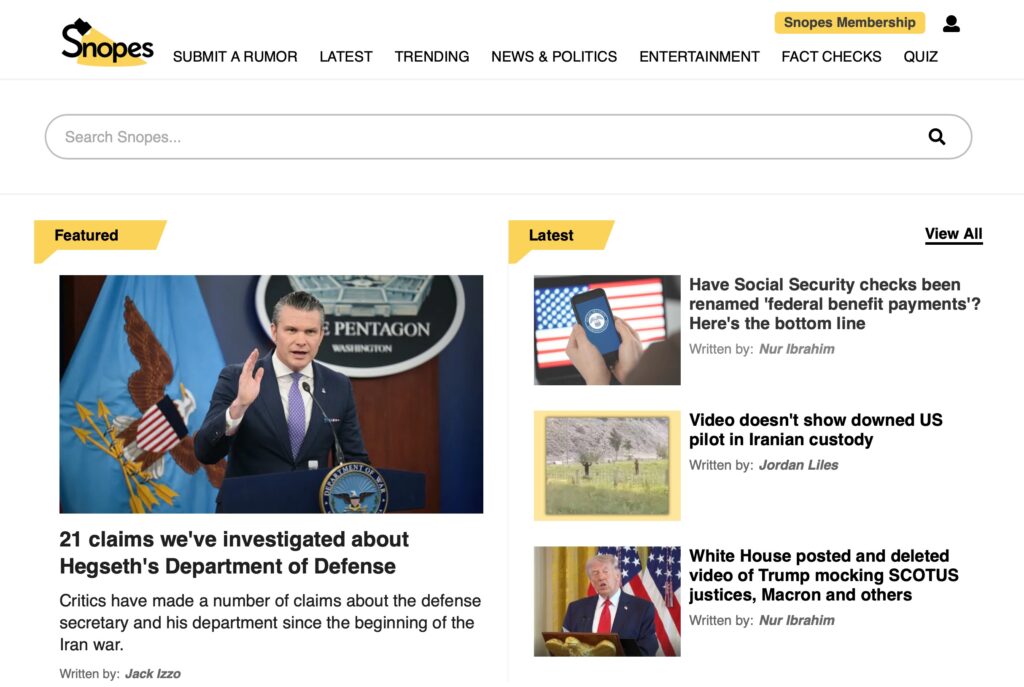
Snopes
The original. They’ve been debunking urban legends since before the internet was in your pocket. If your brother-in-law posts some weird story about a “secret law,” check Snopes first. It’s usually an old myth with a new coat of paint.
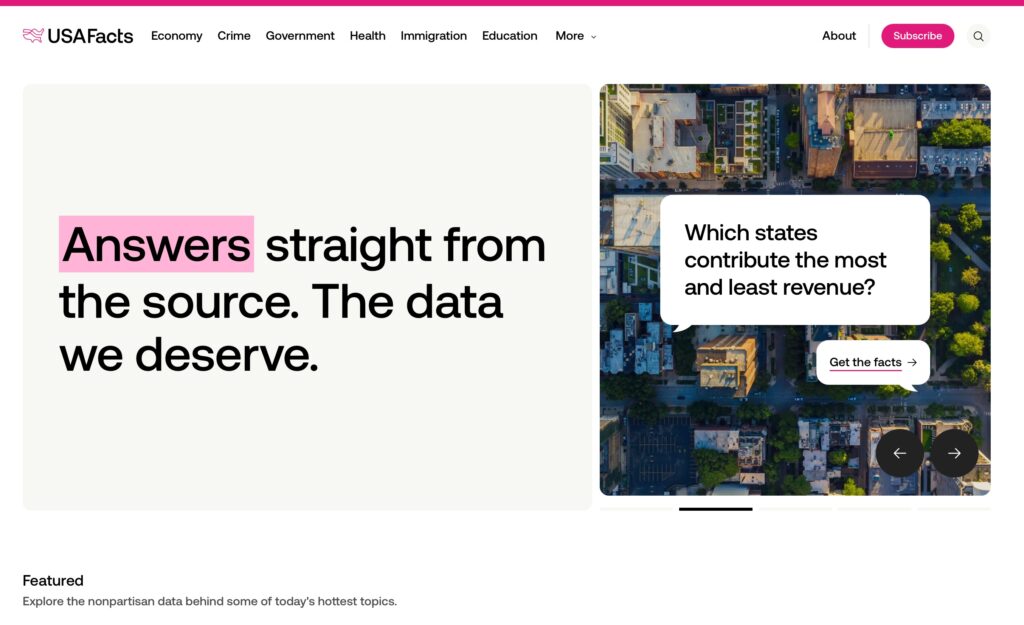
USA Facts
Founded by former Microsoft CEO Steve Ballmer, this site does something the government should have done a long time ago: it runs the country’s data like a business. They don’t use “expert opinions” or “think tank studies.” They exclusively use official, non-partisan government data from over 70 agencies.
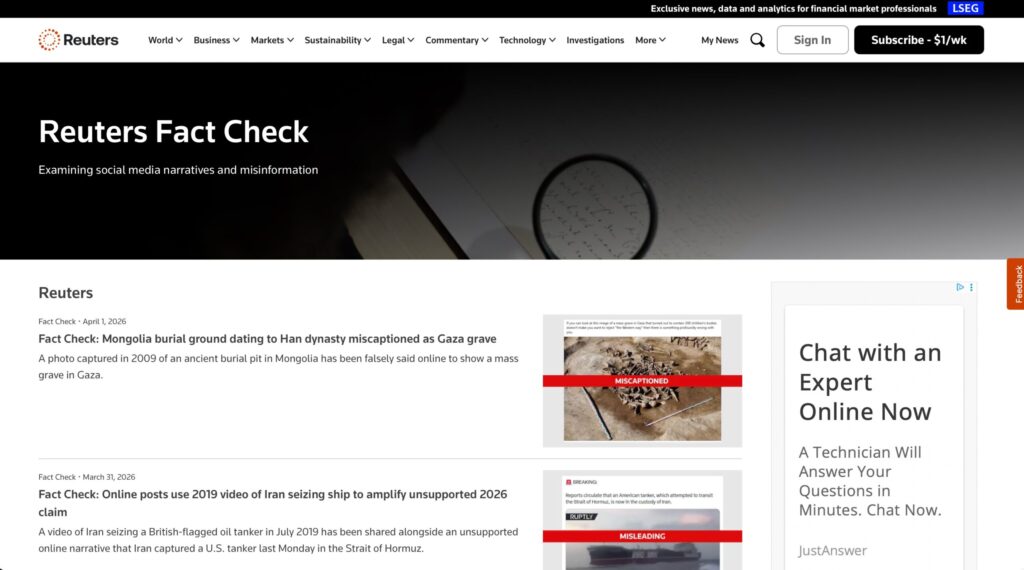
Reuters Fact Check
These guys are the “just the facts” heavyweights. Founded in 1851, Reuters operates on a set of “Trust Principles” that prioritize independence and freedom from bias. They don’t do “hot takes” or “opinion pieces” masked as news. Their fact-check unit focuses on the big stuff: manipulated videos, fake social media claims, and political gaslighting. They show you exactly where the information came from and how they verified it. It’s dry, it’s professional, and it’s a great way to clear the smoke.
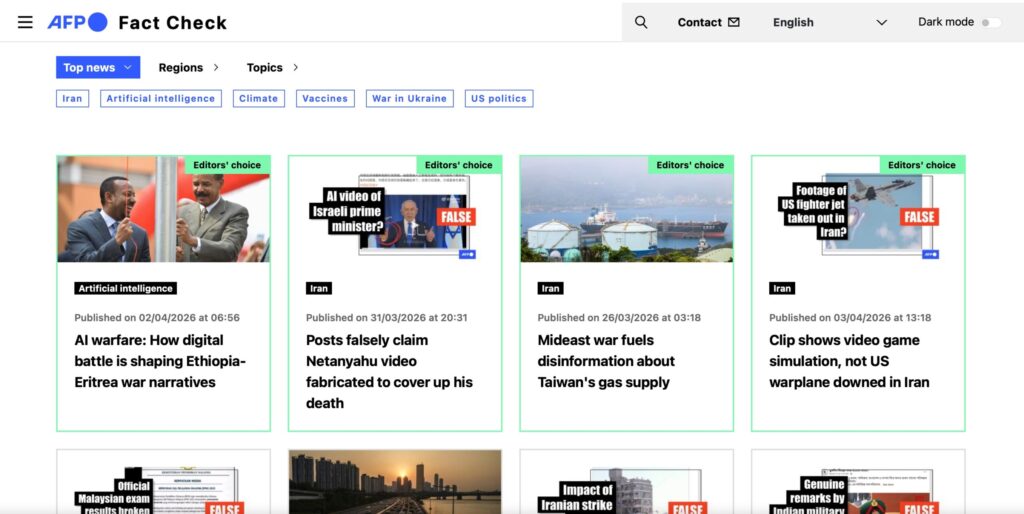
AFP Fact Check
Agence France-Presse (AFP) is the world’s leading global fact-checking organization, with journalists on the ground in nearly 100 countries. They don’t just sit in a beige office; they use digital forensics and local expertise to debunk everything from health scams to election lies. They are known for their “exploratory” style—they walk you through their sleuthing step-by-step, often using side-by-side photo comparisons to show you exactly how you’re being fooled. If a rumor is spreading globally, AFP is usually the first to take a shovel to it.
Tools for the Do-It-Yourself-er
If you want to be the guy who actually knows what he’s talking about at the barbecue, use these.
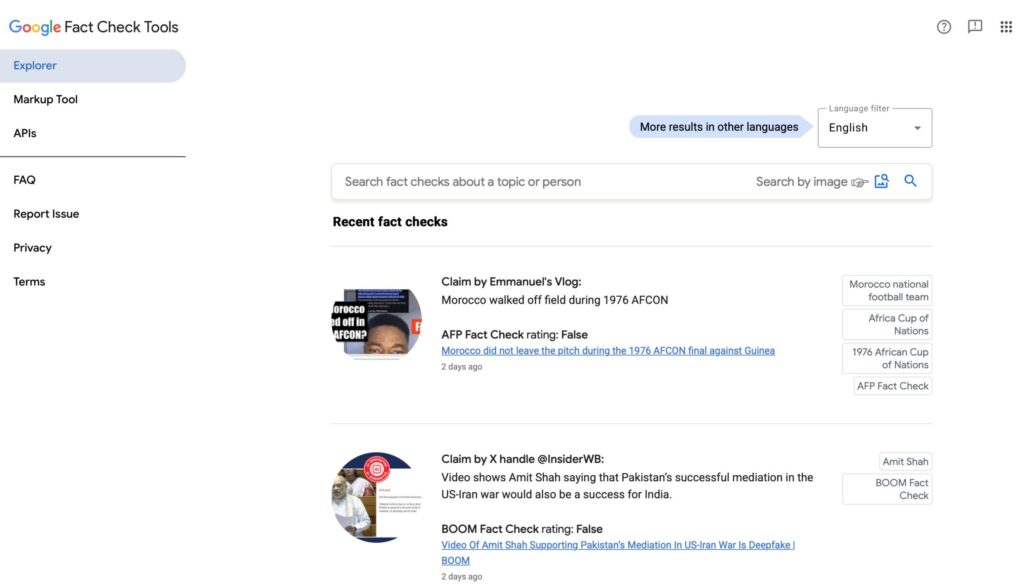
Google Fact Check Explorer
Think of this as a search engine specifically for things that have already been debunked. Type in a keyword or a claim, and it’ll show you who checked it and what the verdict was.
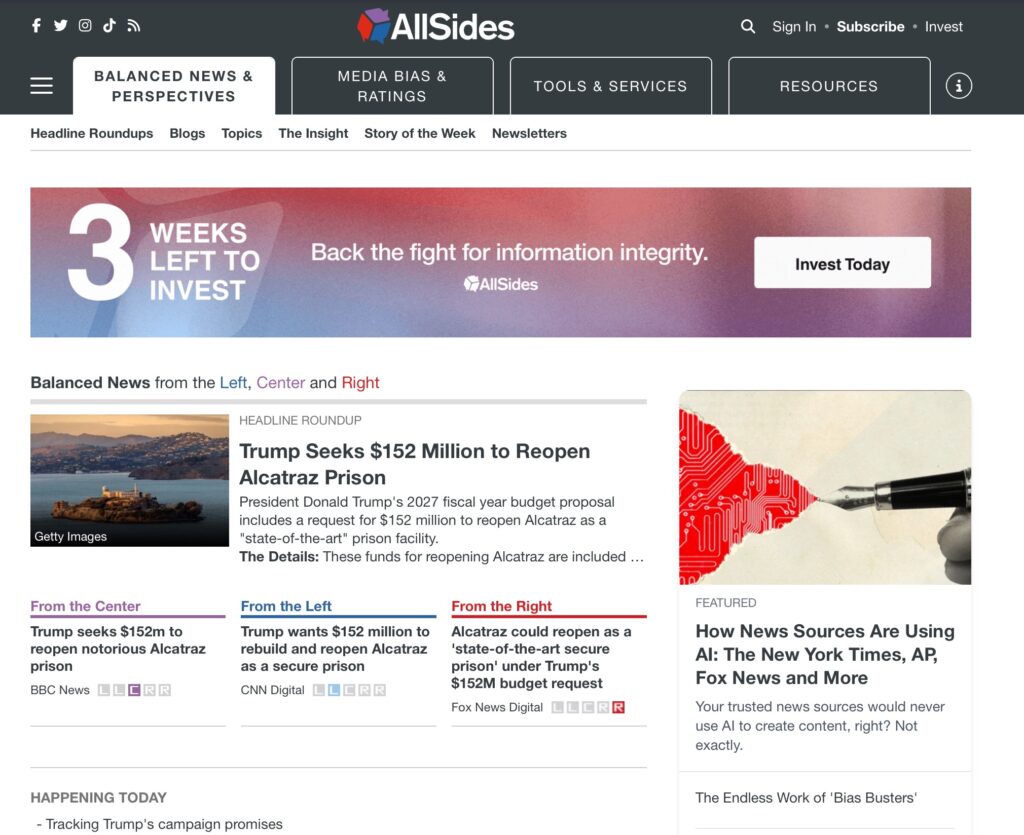
AllSides
This one is interesting. They show you the same news story from the Left, Center, and Right side-by-side. It’s a great way to see how the “grift” works on both sides of the aisle so you can find the truth somewhere in the middle.
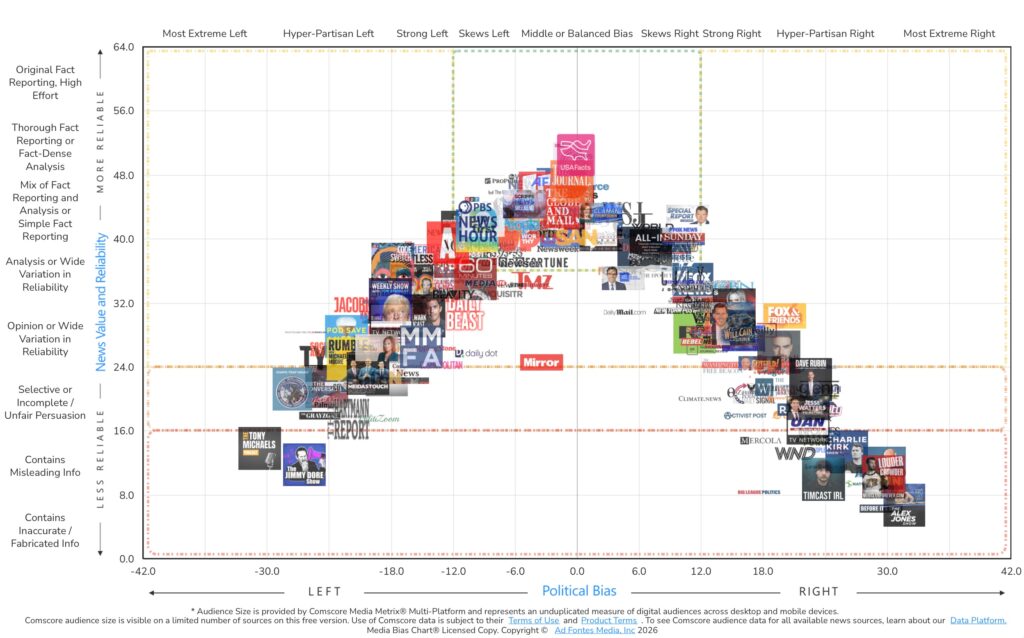
Media Bias Chart (Ad Fontes Media)
A visual map that shows you where news sources land on the spectrum of “Reliable” vs. “Garbage” and “Left” vs. “Right.” If your favorite news site is in the bottom corners, you’re being sold a bill of goods.
The Social Media Smoke-Jumpers
Social media is where logic goes to die. These tools help you see through the filters and the fakes.
The Health & Science Reality Check
When someone tries to sell you a “miracle cure” or tells you that a basic vegetable is “toxic,” run it through these filters.
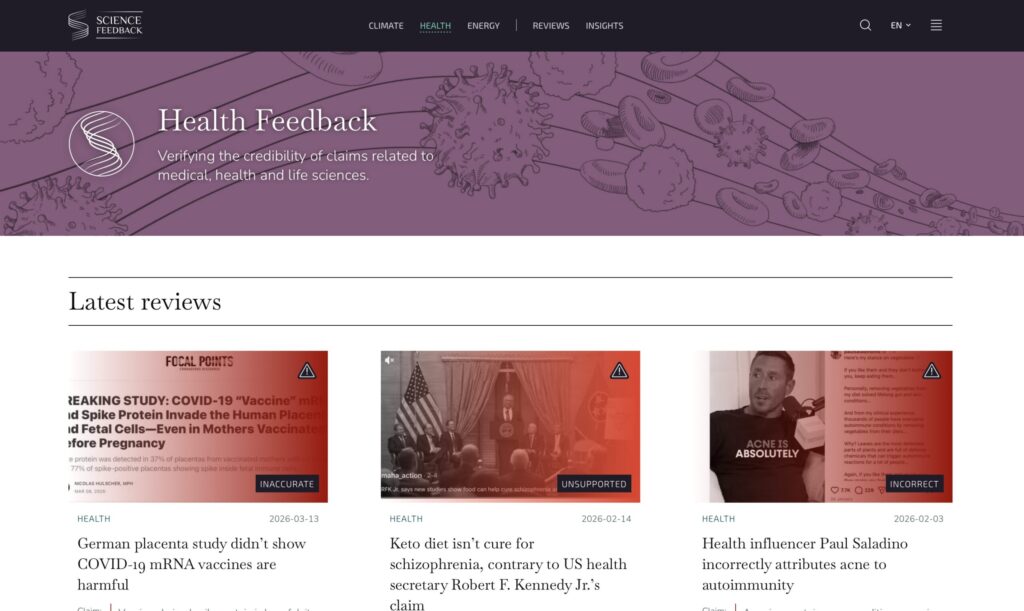
Health Feedback
This is a network of actual scientists and doctors who review influential health claims in the media. They don’t just say something is “false”; they give it a “Scientific Trust” score and explain exactly where the logic fell apart. It’s high-level stuff, but if you want to know if that new “superfood” is actually super, this is the place.
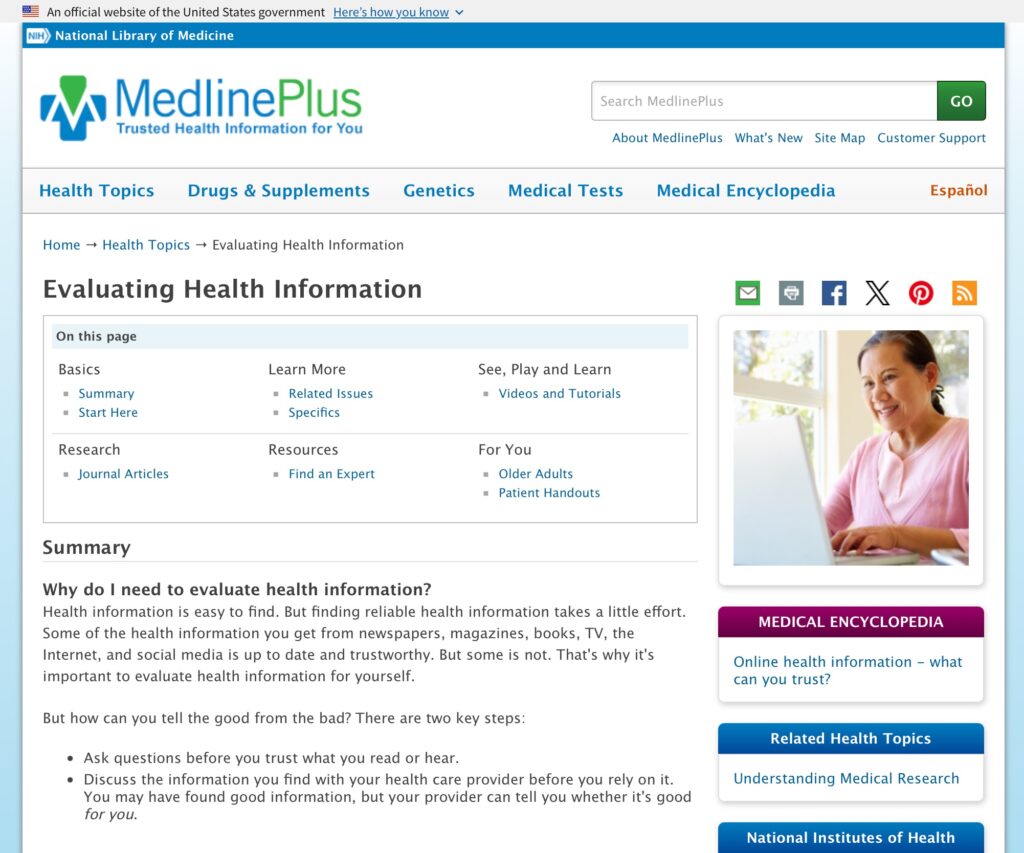
MedlinePlus (Evaluating Health Information)
This is run by the National Library of Medicine. It’s the “Owner’s Manual” for your health. They have a great guide on how to spot health fraud and how to tell if a website is just a storefront disguised as a clinic. If the URL doesn’t end in .gov, .edu, or .org, you should probably keep your wallet closed.

Science-Based Medicine
The simplest tool in the box. If you see a photo that looks suspicious, upload it here. It will show you every other place that photo has appeared on the internet. You’ll quickly find out that the “war zone” photo everyone is sharing is actually a still from a 2012 movie.
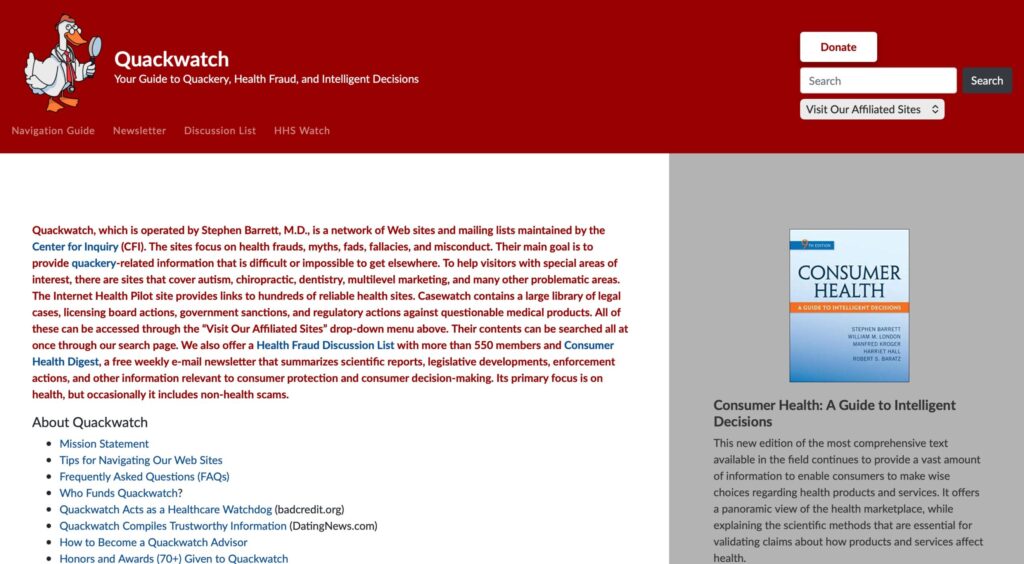
Quackwatch
It looks like a website from 1996, and that’s because the guy running it has been fighting health fraud since the 80s. Dr. Stephen Barrett has zero patience for “fads and fallacies.” It’s an old-school archive of every medical hustle known to man. If a “guru” is peddling it, Barrett has probably already written a 10-page takedown of why it’s nonsense.
Basic Rule of Thumb
If you can’t find the same “shattering news” on at least two of these sites, it’s not news. It’s a pitch.
Put down the moss, turn off the notifications, and use your head.
Lead Stories (Trendolizer)
Think of this as a search engine specifically for things that have already been debunked. Type in a keyword or a claim, and it’ll show you who checked it and what the verdict was.
InVID Verification Plugin
This is a “Swiss Army Knife” for your browser. It’s built for journalists, but anyone can use it. It helps you break down videos into keyframes and run reverse image searches to see if a clip has been manipulated. It’s a bit technical, but if you actually care about the truth, it’s worth the five minutes to learn.
Google Reverse Image Search
The simplest tool in the box. If you see a photo that looks suspicious, upload it here. It will show you every other place that photo has appeared on the internet. You’ll quickly find out that the “war zone” photo everyone is sharing is actually a still from a 2012 movie.