This isn't about being a cynic. It’s about being a skeptic.
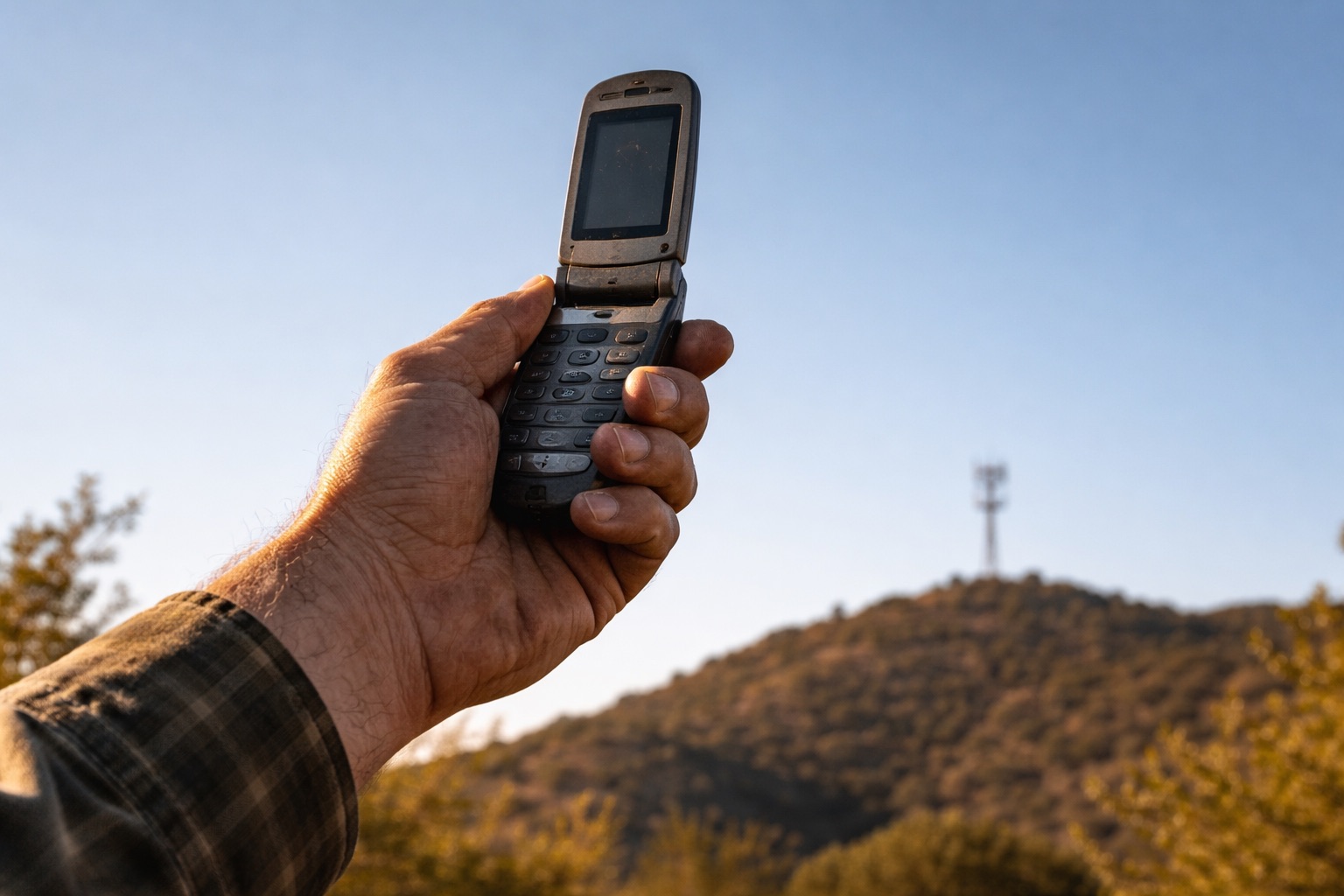
Are We Cooking Our Brains With Radio Waves?

My dad grew up in rural America. He ate bologna sandwiches, drank well water, and smoked Marlboros until the mid-70s. The idea that invisible waves bouncing off his cordless phone were going to give him brain cancer would have made him laugh so hard he’d pull a muscle.
That was before the internet turned every household appliance into a potential murder weapon.
Welcome to the world of EMF panic. The claim is simple: the invisible electromagnetic fields coming from your phone, your WiFi router, your neighbor’s 5G tower, and possibly your microwave are quietly cooking your cells, scrambling your DNA, and setting you up for a cancer diagnosis. The influencers selling Faraday cage phone pouches and “EMF-protective” pendants are very sure about this. The science is not.
Let’s Talk About What EMF Actually Is
Electromagnetic fields are not a conspiracy. They’re real, they’re everywhere, and they come in a huge range of frequencies. The thing that determines whether a type of radiation is dangerous is not that it exists, it’s where it falls on the spectrum.
On the dangerous end, you have ionizing radiation: X-rays, gamma rays, cosmic rays. These have enough energy to break chemical bonds and damage DNA. That’s a real problem. On the other end, you have non-ionizing radiation, which includes radio waves, microwaves, WiFi signals, 5G, and visible light. These do not have enough energy to break chemical bonds or damage DNA. Your desk lamp is non-ionizing radiation. So is the sun, mostly.1
5G operates at frequencies up to around 80 GHz. That sounds alarming until you learn that millimeter waves at those frequencies actually penetrate less deeply into tissue than lower-frequency signals. They’re absorbed in the first few centimeters of skin.2 The main safety concern with high-frequency signals is heat. If you absorb enough, tissue warms up. Current safety standards include a 50-fold safety margin from the threshold where that heating actually matters.1
What About All the Cancer Studies?
Here’s where it gets more honest, because there is real science worth discussing.
The biggest epidemiological studies, including the COSMOS study with over 250,000 participants and a 2024 meta-analysis covering 63 separate studies, found no statistically meaningful association between cell phone use and glioma, meningioma, acoustic neuroma, or other brain cancers.3 4 As a sanity check: brain cancer incidence rates in the US, Nordic countries, and Australia have remained stable for decades, even as phone use has exploded. If phones were causing brain tumors, we’d expect to see the numbers move. They haven’t.5
There is one study that deserves honest treatment, though. The National Toxicology Program ran a ten-year, $30 million animal study and found clear evidence of malignant schwannomas in the hearts of male rats exposed to radiofrequency radiation. Some evidence of brain gliomas in male rats too.6 That’s a real finding from a serious federal program, and you’d be a grifter yourself to ignore it.
But context matters. The rats were exposed to radiation levels at or above the maximum allowed human exposure, for nine hours a day, for up to two years. The effects showed up in male rats only, not females, and not in mice at all. The FDA, which had nominated the study in the first place, looked at the results and concluded that current safety limits for cell phones remain acceptable.7 The NTP’s own senior scientist noted the findings should not be directly extrapolated to human cell phone use.6 Even the rats in the irradiated groups lived longer on average than the control rats, probably because the radiation disrupted a kidney condition common in older male rats.8
The NTP study is a reason to keep researching. It’s not a reason to sell someone a $70 orgonite pendant.
The People Who “Hear” the 5G Tower
Let’s talk about electromagnetic hypersensitivity, because the people who experience it are the ones I feel worst for in this whole conversation.
EHS is the condition where individuals report real, disabling symptoms: headaches, fatigue, skin tingling, difficulty concentrating. They attribute these symptoms to WiFi signals, cell towers, and other EMF sources. The symptoms are genuine. The cause isn’t what they think it is.
Across more than 46 double-blind provocation studies involving over a thousand self-reported EHS individuals, participants could not detect whether they were being exposed to actual electromagnetic fields or a sham signal at rates any better than chance.9 In these studies, people reported symptoms based on whether they believed the signal was on, not whether it actually was. That’s a textbook nocebo effect: the harm caused by the belief that harm is occurring.10
The WHO recognized EHS as a global health concern back in 2005, not because EMF was causing it, but because the suffering was real and needed clinical evaluation. The recommended approach is to rule out other causes, not to assume the WiFi router is making you sick.9
Sensationalized EMF coverage doesn’t just sell products. It manufactures the very anxiety that creates real symptoms in real people.
So Who’s Actually Selling You This?
There’s a category of grift here that operates on a sliding scale. On the mild end, you have wellness influencers who post about “reducing your EMF exposure” and happen to sell grounding mats, shungite crystals, and $200 phone cases lined with “protective fabric.” None of these products have any demonstrated mechanism of action. Some actively break the safety standards that do protect you by creating a false sense of security.
On the more extreme end, you have the full 5G conspiracy market, which during the COVID-19 pandemic hit a fever pitch. Towers were set on fire in the UK based on viral videos claiming 5G was either spreading the virus or suppressing immune systems. This particular claim combined two independent things (5G rollout timing and a pandemic) and called it causation. Cell towers burned. Technicians were attacked. Actual communication infrastructure, including systems used by emergency services, was damaged.11
That’s what happens when panic replaces evidence.
The Part Where We’re Honest
The science on non-ionizing radiation is not completely closed. Researchers are still looking at whether there are non-thermal biological effects at lower exposure levels, and whether current safety standards account for everything. That’s how science is supposed to work. The NTP animal findings haven’t been fully explained. Long-term studies on newer 4G and 5G frequencies are still accumulating. Children’s developing brains are worth studying specifically.2
What the evidence does not support is treating your WiFi router like a ticking time bomb. It doesn’t support buying anything from someone who posts ominous red-tinted videos with alarming background music. And it really doesn’t support the idea that you can “hear” 5G in a major city.
Back in the day, we worried about real things. Asbestos in the walls. Lead in the pipes. Those are ionizing and directly toxic materials with clear, documented mechanisms of harm. The lesson there wasn’t to be afraid of everything invisible. It was to follow the actual evidence.
The evidence on EMF says: keep studying it, hold the industry to safety standards, and put the shungite stone down.
References
- Cell Phones and Cancer Risk Fact Sheet, National Cancer Institute ↩
- 5G and Brain Tumours, Brain Tumour Research / ICNIRP ↩
- COSMOS: Mobile phone use and brain tumour risk, prospective cohort study, Environment International 2024 ↩
- The effect of exposure to radiofrequency fields on cancer risk: systematic review of human observational studies, Environment International 2024 ↩
- Cancer incidence trends and cell phone use, National Cancer Institute ↩
- High exposure to radiofrequency radiation linked to tumor activity in male rats, NIH / National Toxicology Program ↩
- Cell Phone Radio Frequency Radiation, NTP / FDA response ↩
- Why You Shouldn’t Worry About the New Study Linking Cellphones to Cancer, Live Science 2018 ↩
- Electromagnetic Hypersensitivity, Australian Radiation Protection and Nuclear Safety Agency ↩
- Symptom Presentation in IEI-EMF: Evidence for a Nocebo Effect, Frontiers in Psychology 2018 ↩
- Wireless device radiation and health, Wikipedia (overview of regulatory and scientific context) ↩