This isn't about being a cynic. It’s about being a skeptic.
The Homesteaders

There’s a woman on the internet who wakes up before sunrise, bakes sourdough from scratch, milks her own cows, raises nine kids, and looks like she just stepped out of a painting. Her farm is beautiful. Her kitchen is warm. Her stove cost $20,000.
She’s not a farmer. She’s a business.
That’s the homesteading influencer in a nutshell. The content is real enough: there are actual goats, actual bread, actual mud on actual boots. But the financial engine running the whole operation isn’t the land. It’s you. Your eyeballs. Your clicks. Your willingness to watch someone else live a life you’ll never be able to afford and feel inspired instead of played.
The Lifestyle That Sells Itself
Homesteading content has exploded over the last several years, and it’s not hard to understand why. People are exhausted. The cost of living is out of control. The commute is soul-crushing. The idea of opting out, of growing your own food and knowing where it came from and not having a boss, hits something real. Nobody’s watching these accounts because they’re stupid. They’re watching because the pitch is genuinely appealing.
The problem isn’t the dream. The problem is who’s selling it, and what they’re not telling you.
Take the biggest name in the space. Her family purchased a 328-acre farm in Utah in 2018 for $2.75 million. Her father-in-law founded JetBlue. She films herself making bread in a kitchen most people will never have, selling it as a model for simple living. When critics noticed the stove, she said she’d bought it used. It retails for about $20,000. The New York Times called her “simultaneously one of the most popular social media stars in the country and a lightning rod for criticism.” That’s a polite way of saying she’s selling a fantasy funded by generational wealth while her audience wonders why they can’t pull it off on a teacher’s salary.
What It Actually Costs
Getting a real homestead off the ground isn’t cheap. Starting costs average between $50,000 and $150,000 once you factor in land, a livable structure, a well, a septic system, and basic power. That’s the budget version. Want solar? Add $15,000 to $30,000. A reliable tractor? Another $25,000 to $75,000. And that’s before you’ve bought a single chicken.
After you’re set up, figure on $500 to $1,000 a month in ongoing operating costs. Property taxes, propane, generator fuel, Starlink so you can post your idyllic life to TikTok. The land isn’t going to pay for itself. The cows aren’t going to fund your retirement.
Nobody knows this better than the people who actually do it.
The People Doing It for Real
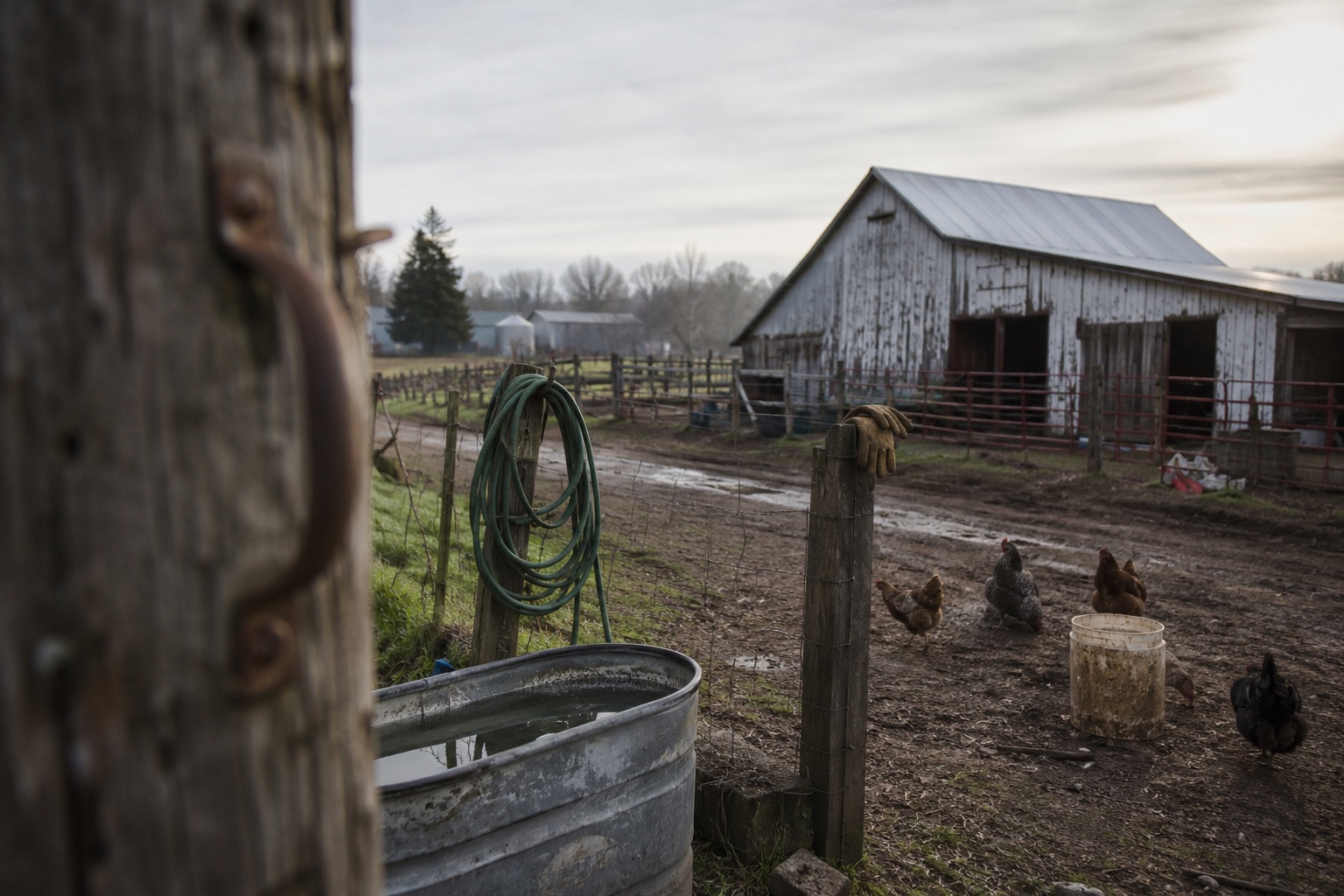
There are real homesteaders out there. Real family farms. People who get up before the sun because the animals don’t care what day it is, who plant by the weather forecast and pray it holds, who fix the tractor themselves because they can’t afford not to. They’re not filming it. They don’t have a ring light.
According to the USDA, the median income from farming itself was negative $1,830 in 2024. Not a small profit. Negative. Most small farm households survive because someone in the family also has a job in town. About 86 percent of American farms fall into the “small” category, and most of them depend on off-farm income to keep the lights on. These are not people getting rich off the land. These are people who love the land enough to work it anyway, knowing the math will probably never add up.
That’s the actual story of homesteading. It’s hard. It’s financially precarious. There’s no retirement plan built in. And the people doing it aren’t complaining about it on social media because they don’t have time.
The Business Behind the Barn Door
So how do the influencers pay for it? The same way every other influencer does. Brand deals. Merchandise. Online stores selling $259 cutting boards and $144 boxes of croissants. Courses on how to ferment things. Affiliate links. Ad revenue from the millions of people watching videos about a life the creator couldn’t actually afford to live without the videos.
This isn’t hypothetical. Ad revenue alone pays between $1 and $6 per thousand views on YouTube. That’s not a living. The real money comes from turning your audience into a customer base, and the homesteading aesthetic is exceptionally good at building loyal audiences. The sourdough isn’t the product. You are.
None of that is illegal. None of it is even surprising once you see it. But it becomes a problem when the packaging implies that the life itself is what’s paying the bills, that you too could quit the office job and live off your land and sell a little honey at the farmers’ market and everything will work out.
It won’t. Not without a trust fund, a warehouse full of employees, and a very good camera.
The Part Worth Keeping
Here’s the thing. The instinct behind all of it isn’t wrong. Wanting to grow your own food, slow down, know where things come from, be less dependent on systems you don’t trust: that’s not naive. That’s actually reasonable. A lot of people have found real satisfaction in backyard gardens, small flocks of chickens, learning to can their own tomatoes. You don’t need 328 acres and a $2.75 million property to do any of that.
Just don’t take financial advice from someone whose father-in-law founded an airline. And don’t measure your life against a highlight reel that’s being monetized whether you click or not.
The people doing this for real aren’t on your For You page. They’re out in the field.
References:
- Hannah Neeleman — https://en.wikipedia.org/wiki/Hannah_Neeleman
- USDA ERS Farm Household Income Estimates 2024 — https://www.ers.usda.gov/topics/farm-economy/farm-household-well-being/farm-household-income-estimates
- USDA ERS Farming and Farm Income — https://www.ers.usda.gov/data-products/ag-and-food-statistics-charting-the-essentials/farming-and-farm-income
- The Real Cost of Starting a Homestead — https://morningchores.com/cost-of-starting-a-homestead/
- How Much Does It Cost to Live Off Grid? — https://www.battlbox.com/blogs/preparedness/how-much-does-it-cost-to-live-off-grid-a-comprehensive-guide