This isn't about being a cynic. It’s about being a skeptic.
Truth in the Age of Clickbait: A Deep Dive

Back when I was a kid, if you wanted the news, you had to wait for the paper to hit the porch or sit through the 6:00 PM broadcast with a guy in a suit who looked like he had never told a lie in his life. You got the facts, you got the weather, and you moved on with your day. There wasn’t this constant, desperate screaming for your attention.
Fast forward to now, and the internet has turned information into a circus. We have traded depth for speed, and the result is the absolute plague known as clickbait.
The History of the Hustle
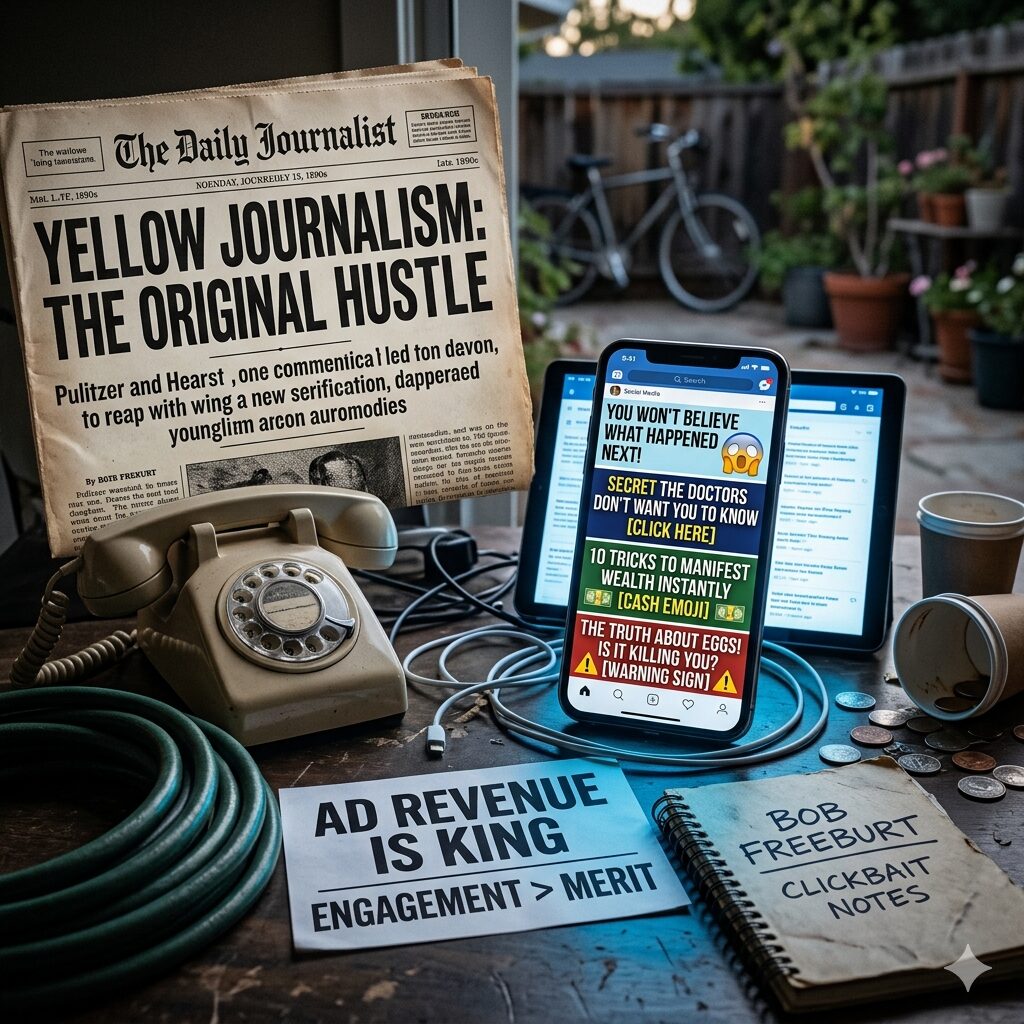
Clickbait isn’t actually new. It is just the digital evolution of “yellow journalism” from the 1890s. Back then, guys like Hearst and Pulitzer used sensational, exaggerated headlines to move physical newspapers. The goals haven’t changed, only the medium has. Instead of newsies shouting on a street corner, we have algorithms whispering in our pockets.
The Psychology: Why Your Brain Falls for It
There’s a reason you click on “You won’t believe what happened to this child star.” It’s called the “curiosity gap.” Humans are hardwired to hate incomplete information. When a headline withholds the punchline, it creates a cognitive itch that your brain can only scratch by clicking.
It’s a precision guided strike on your biology. They use “loss aversion” to make you feel like you are missing out on a secret, and they use “visual primacy” because your brain processes that stupid, shocked face in the thumbnail 60,000 times faster than the actual text. It is not a lack of intelligence that makes you click. It is just your hardware being hijacked.
The Death of the Gatekeeper
In the old days, editors were the gatekeepers. They decided what was important based on journalistic merit. But when news moved online, the business model shifted from subscriptions to ad revenue.
In this new world, “importance” doesn’t matter. Only “engagement” does. Media outlets need clicks to sell ad space. If they don’t get the click, they don’t get paid. This has forced even the most “reputable” sources to start writing headlines like they’re working for a grocery store tabloid.
The Result: A World of Noise
Clickbait has become mainstream because it works. Algorithms on social media reward the “shareable” and the “outrageous” over the nuanced and the true. We’ve reached a point where the truth is often too boring to compete with a well crafted lie or a dramatic exaggeration.
It’s okay to admit the internet is exhausting. You don’t have to click on everything. Sometimes the most radical thing you can do is realize that if a headline is trying that hard to get your attention, it probably isn’t worth giving.
Go outside. Ride a bike. Drink some hose water. The “shocking secret” in that article isn’t going to change your life anyway.